
Seedance vs Sora: Compare the Workflow Before You Choose a Model
Compare Seedance vs Sora with the same input, evaluation criteria, and version notes instead of relying on broad claims about which model is best.

A useful Seedance vs Sora comparison starts with a defined job: the same permitted source, the same short shot brief, and the same review criteria. Video-model capabilities and access can change quickly, so do not treat an old benchmark, a social clip, or a vendor claim as a final answer. Test the current versions that you can actually use.
Last updated: July 30, 2026 · about 6 min read
Define the job before you compare models
“Which is better?” is too broad to produce a useful result. A product reveal, a portrait-led clip, and a multi-shot concept have different failure points. Choose one narrow job, then decide what counts as success before you generate.
| Comparison dimension | Question to decide first |
|---|---|
| Input | Are you starting from text, one permitted image, or a planned sequence? |
| Shot goal | Is the priority motion, a stable subject, a camera move, or a clear first frame? |
| Iteration | How many revisions can the project tolerate before the idea stops being useful? |
| Review | Who checks invented details, rights, and final claims before export? |
This keeps a test honest. It also stops a dramatic output from winning simply because it is more surprising than the brief asked for.
Run a small, repeatable comparison
- Write one short brief. State the subject, setting, motion, duration target, and the details that must not change. Use only material you have permission to test.
- Keep the inputs comparable. If both tools accept the same kind of source, use that source. If the workflow differs, record the difference instead of pretending the tests are identical.
- Review the whole clip. Check the start, middle, and final frame for identity drift, invented labels, unstable objects, and motion that undermines the intended message.
Do not compare unnamed or older versions as if they were the same product. Record the tool, model/version label shown at the time, date, input type, and settings you actually used.
For an image-led test, begin with Seedance image-to-video. If your priority is how a model handles a reference over several generations, the character-consistency guide gives a narrower testing workflow.
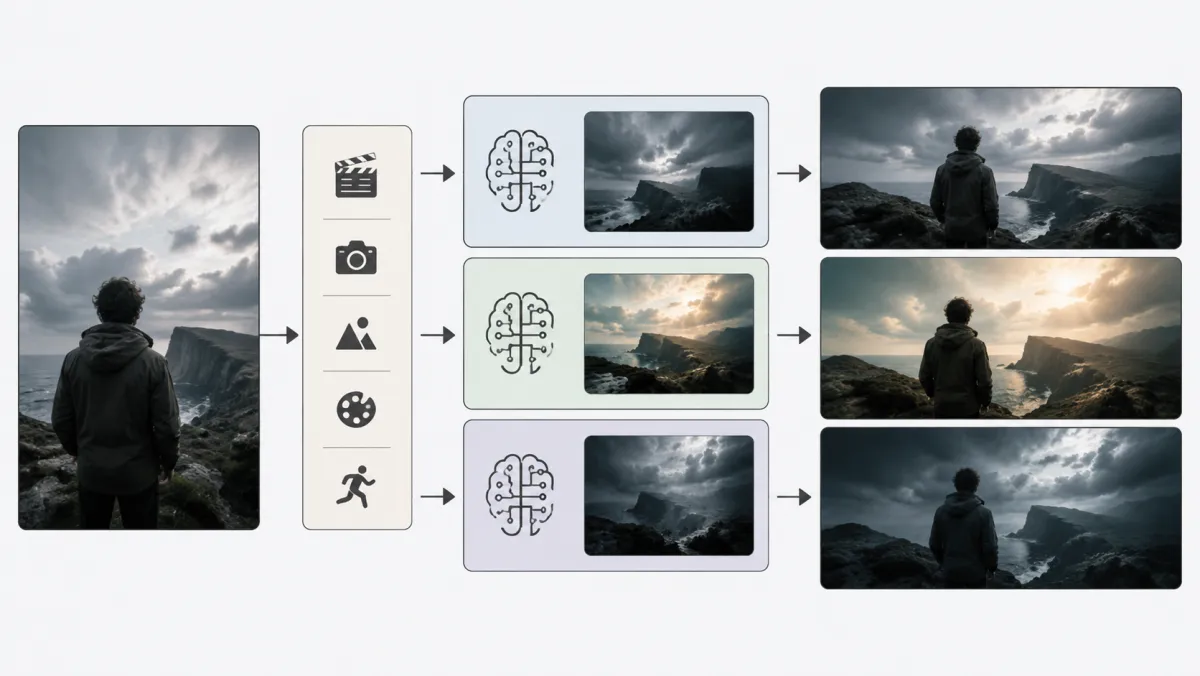
Compare the work required to reach an approved clip, not only the most impressive frame.
Read comparison claims with care
Many public comparisons mix versions, image inputs, prompt lengths, and edit passes. A claim about speed, price, resolution, duration, or availability needs a dated primary source; it should not be copied from an undated roundup. The same is true for terms, commercial rights, and regional access.
If you only need a fast first-pass storyboard, a simpler workflow may be the better choice. If you need a stable character or precise visual continuity, set up a stricter source and review process. Neither conclusion is universal.
The existing Seedance vs Veo, Seedance vs Kling, and Seedance vs Runway guides use the same principle: choose the evaluation dimensions before you choose the model.
Keep rights and disclosure in the test plan
Only test with permitted images, product assets, and people who agreed to the intended use. A generated clip should not imply a real event, endorsement, or performance that did not happen. For client or public work, add an accountable review before publishing and check the current terms of every service involved.
Frequently asked questions
Is Seedance or Sora better for every AI video task?
No. The useful choice depends on the current versions available to you, your input type, the shot you need, the iteration time you can afford, and the review standard for the final asset.
How can I make a fair model comparison?
Use a short written brief, permitted source material, comparable settings where possible, and the same review checklist. Record the date and version labels so your conclusion does not outlive the test.
Related guides
Make the comparison usable
Use one defined job and a full-frame review, then choose the workflow that gives you an approved result with the least unnecessary guesswork in Seedance 2.5.