
Seedance 2.0 Fight Scene Prompts: Safe Shot Plans
Build fictional Seedance 2.0 fight-scene prompts with clear beats, restrained camera work, and a safety-first review before sharing.
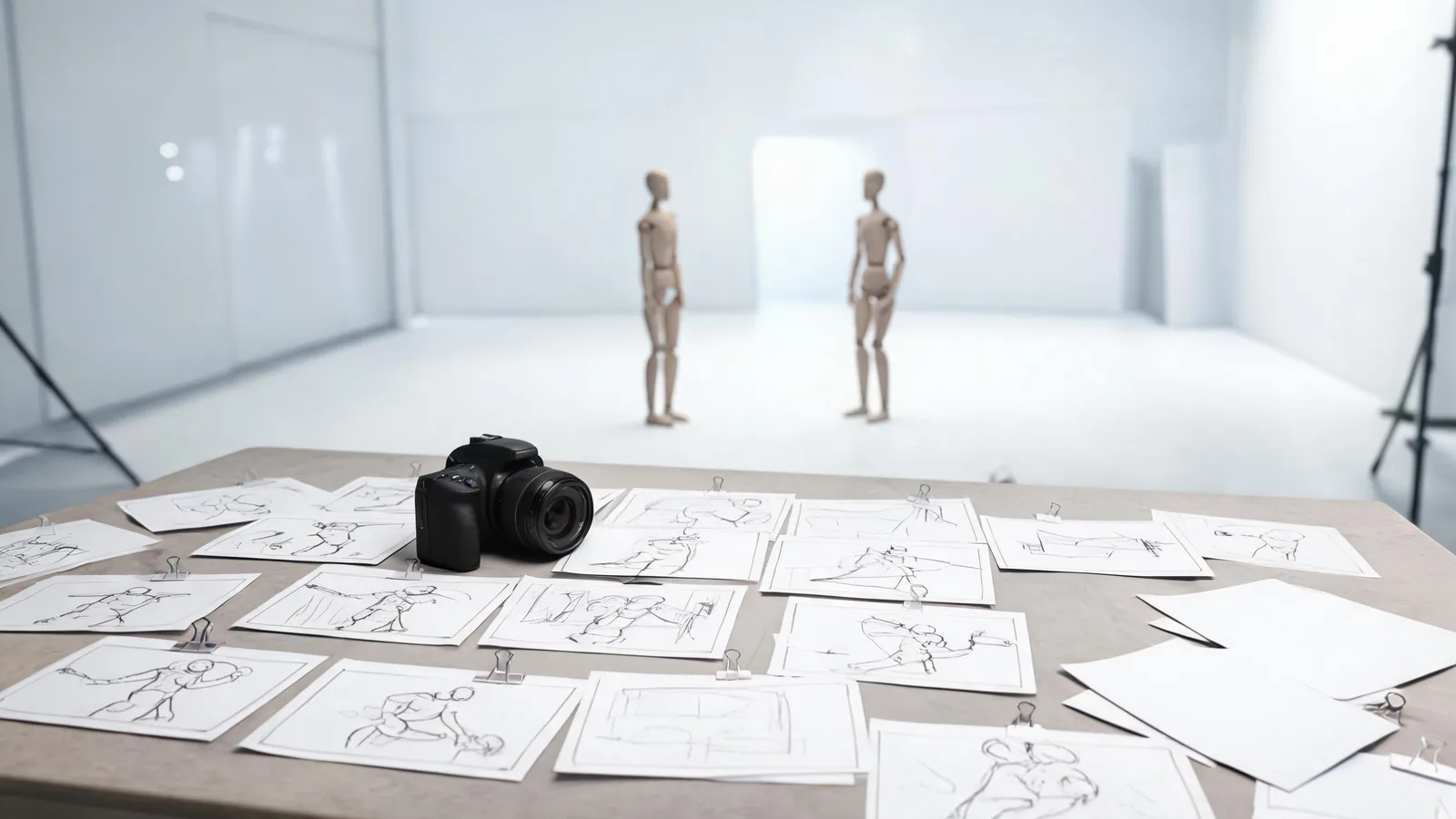
The most reliable Seedance 2.0 fight-scene prompt is a short fictional shot plan: establish two original adult characters, ask for one readable action exchange, keep the camera to one move, and finish on a stable frame. Do not use real people, protected characters, or a prompt that makes an invented violent event look real. Start with a rehearsal-like, non-graphic scene and review every frame before you share it.
Updated August 31, 2026 · about 7 min read
This guide is for fictional action, stunt-previsualization, and stylized animation. It is not a way to imitate a performer, recreate a real altercation, or make a clip look like documentary footage. Availability, controls, and policy vary by provider, so confirm the current screen and terms before you generate.
Start with one action beat, not a whole battle
Action scenes fail when a prompt asks for too many things at once: multiple people, fast choreography, a moving camera, weapons, a crowd, explosions, dialogue, and several locations. Give the model a smaller job first.
Use this four-beat plan:
| Beat | What to define | Keep it simple |
|---|---|---|
| Opening | Who is where and what the camera sees | Two original adult characters in a clear space |
| Exchange | One visible action and one response | Step aside, block, recover |
| Reset | Where the people and camera settle | Both characters return to readable positions |
| Ending | A frame that can cut to the next shot | Stable wide or medium composition |
The plan is a creative constraint, not a promise of precise choreography. If a clip needs several strikes, throws, or angle changes, make separate short shots and choose the usable ones in an editor. For a broader sequence workflow, see how to turn a prompt into a storyboard.
A safe prompt formula for fictional action
Write a prompt in this order:
Characters and setting + one action exchange + one camera instruction + what must stay clear + ending frame + limits.
For example:
Two original adult martial-arts students rehearse a non-contact move in a bright empty training studio. One steps forward with a slow open-hand feint; the other pivots away and returns to a balanced stance. Medium-wide locked camera with one gentle push-in. Keep both faces, hands, clothing, floor lines, and distance between the performers clear. End with both people visible and still. No real people, no logos, no injuries, no weapons, no text, no crowd, and no sudden cut.
This wording prioritizes readability over intensity. It gives the motion a beginning and an end, then says what matters in the frame. If your workflow begins with an approved source image, the reference image checklist is a useful gate before you upload it.
Three prompt patterns to adapt
1. Training-room exchange
Use this when you need a clean action test with minimal risk of a confusing background.
Two original adult athletes in plain dark training clothes rehearse a slow, non-contact defensive exchange in an uncluttered studio. The first reaches forward; the second sidesteps, raises an open hand to block, then both reset. Medium-wide tripod camera, natural soft light, one continuous take. Keep limbs, faces, clothing, floor, and spacing stable. End on a still balanced stance. No injury, no weapon, no recognizable person, no logo, no text.
2. Stylized fantasy without a copied character
Use an original setting and original costume language instead of naming a franchise or public figure.
Two original adult travelers cross a wind-swept stone bridge at dawn. One swings a padded practice staff in a slow arc; the other steps back and deflects it with a wooden training pole. Side-on medium shot, slow lateral camera drift, light mist in the distance. Keep the bridge, costumes, poles, and body proportions stable. End with the two travelers separated and fully visible. No recognizable character, no blood, no branded costume, no collapse, no extra people.
3. Chase-to-reset, not impact
This is often easier than a close-quarters sequence because the characters do not overlap.
Two original adult runners move through an empty sunlit plaza in a clearly fictional film scene. One changes direction around a fountain; the other follows at a safe distance, then both stop facing opposite directions. Wide elevated camera with a single slow pan. Keep faces, clothing colors, fountain shape, shadows, and pavement lines stable. End on a wide still frame. No collision, no real location claim, no crowd, no logos, no text.
Plan the camera like a safety rail
For an action test, use one camera behavior. A locked frame or a slow lateral move makes it easier to review spacing, limbs, and important props. An orbit, zoom, handheld shake, and fast tracking move in the same short clip create competing priorities.
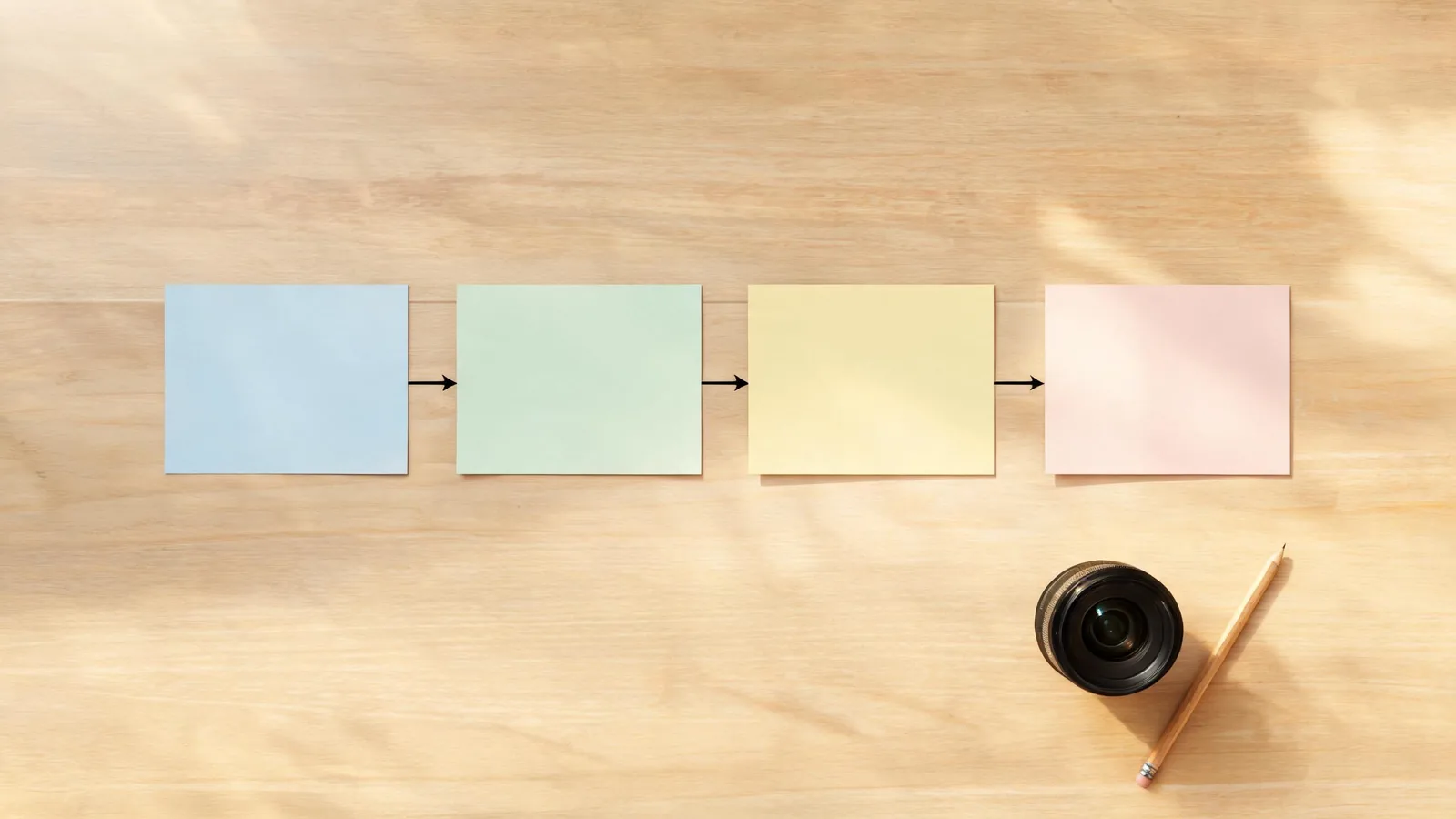
This editorial planning image represents a four-beat workflow, not a product interface or a generated output.
For a specific move vocabulary, use the camera movement prompt guide and select one move that supports the beat. If the shot becomes soft or smeared, simplify the action before you add negative wording; the motion-blur guide explains that tradeoff.
What to keep out of the prompt
Avoid prompts involving a real person's likeness, a public figure, a copied fictional character, a real fight, graphic injury, or a claim that a clip records an event. Do not substitute a real person's name with "looks like" language. If a source image depicts someone recognizable, get permission that covers this motion and the intended publication—not merely permission to possess the photo.
The U.S. Copyright Office's AI initiative is a useful starting point for following U.S. policy materials on AI and copyright. It does not decide whether your particular prompt, source, or publication is permitted; for a commercial use, check the current terms and get advice appropriate to your situation.
Review the whole clip before publishing
Run this short review after every render:
- Identity: Are all characters original or properly authorized, with no accidental lookalike cue?
- Context: Could the scene be mistaken for a real incident, endorsement, or news clip?
- Motion: Are faces, hands, body positions, and important objects readable from beginning to end?
- Claims: Did an invented sign, logo, uniform, or location appear that changes the meaning of the scene?
- Edit point: Does the final frame hold long enough to cut cleanly?
If one of these checks is unclear, keep the render as a private experiment or regenerate a simpler shot. A polished-looking clip is not proof that the people, event, or implied setting is real.
Frequently asked questions
How long should a Seedance 2.0 fight-scene prompt be?
Start with four short beats: opening positions, one action exchange, a reaction or reset, and a stable ending. Add detail only when it assigns a clear visual job.
Should I use real people in an AI fight prompt?
No. Use original fictional adult characters or sources you are permitted to animate, and do not create a clip that could be mistaken for a real person's violent act.
Why does an AI action scene lose track of hands or props?
Fast action combines several hard visual changes at once. Reduce the number of characters, actions, camera moves, and important objects, then test a shorter beat.
Keep the first pass modest
Build one clear fictional action beat, inspect it at normal speed, and only then add a second shot. That workflow leaves room for creative iteration without treating a generated scene as evidence or a finished stunt sequence.