
Seedance Fashion Video: Review a Lookbook Concept Before You Post
Review a Seedance fashion-video concept against its permitted garment reference, reject material changes, and decide whether a labeled concept can be posted.
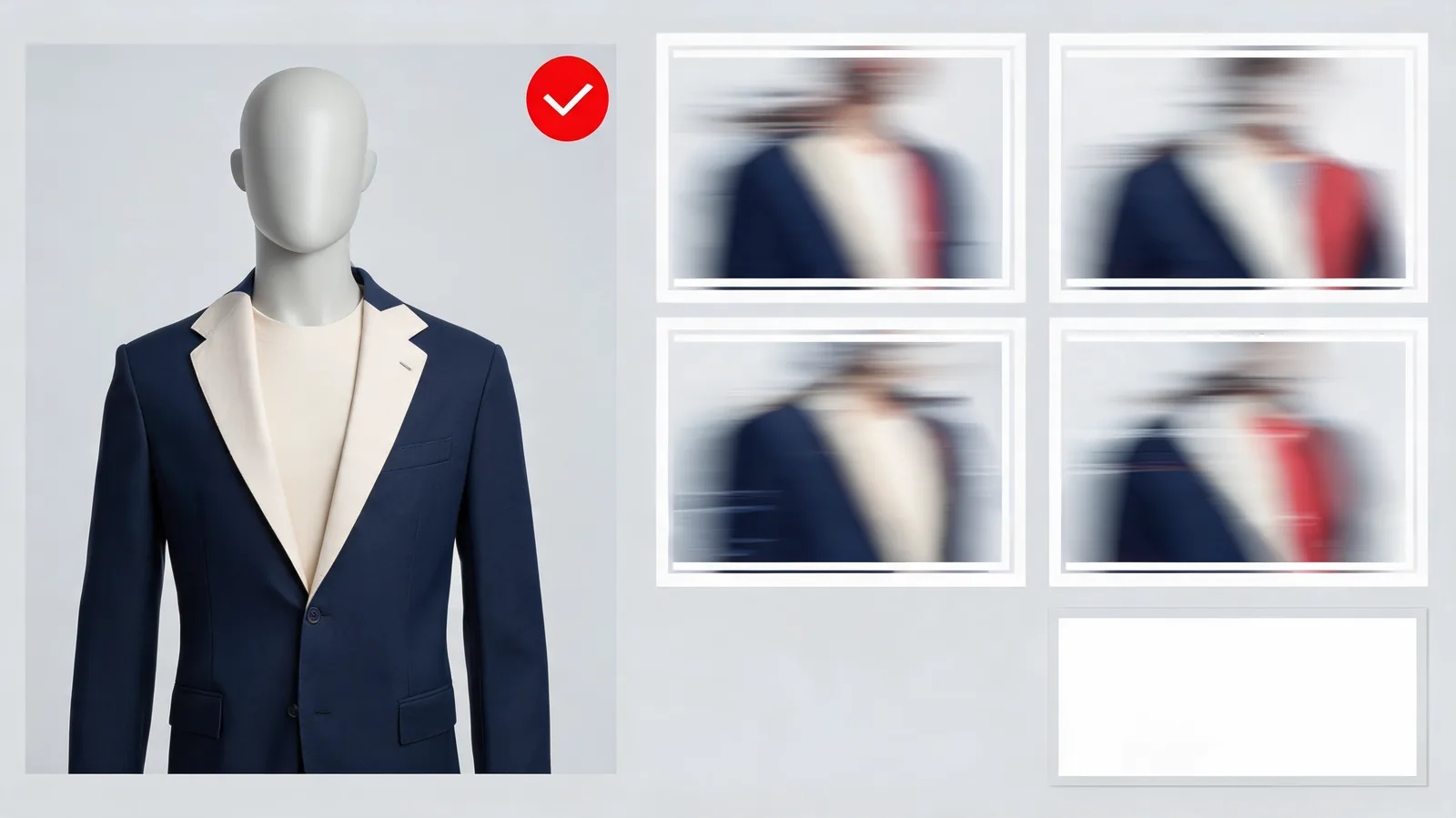
Before posting a Seedance fashion-video concept, compare the complete clip with the permitted garment reference, reject changed seams, silhouette, print, fit, material, branding, or implied availability, and decide whether the output can appear only as a clearly limited concept. If a viewer could take a frame as evidence of an actual product or campaign fact, replace it with verified photography, footage, or copy.
Published September 30, 2026 · Post-render lookbook-concept approval guide
This is the post-render companion to Seedance fashion-video prompts. The older guide is for making a restrained test: one reference image, one small action, and one camera move. This page starts after a clip exists. Its different question is whether the finished concept can be kept for a defined use, revised, or rejected before it reaches a customer-facing channel.
Fashion imagery rewards close attention. A clip can feel convincing while quietly changing a lapel edge, sleeve length, stitch line, button count, fabric behavior, print scale, accessory, body proportion, or logo-like mark. Those changes may be harmless in an internal mood discussion and unacceptable beside a product name, collection announcement, price, or shopping link. This is editorial workflow guidance, not legal advice. Check the current rules, platform terms, client approvals, and local requirements for the actual campaign.
Review the whole clip beside the permitted source
Put the exact approved source photo, line sheet, sample reference, or verified footage next to the entire output. Do not approve from a single attractive still. Watch at normal speed, then inspect the opening, the most active motion, and the final frame. Record what the source can actually establish.
| Record | Keep | Why it matters |
|---|---|---|
| Permitted reference | Asset ID, rights note, and approval date | Establishes what may be shown and compared |
| Generated candidate | Output version, complete clip, and creation date | Stops a selected thumbnail from hiding motion drift |
| Protected details | Garment silhouette, seams, material, print, trim, color, accessories, and branding | Gives reviewers a specific comparison list |
| Intended use | Internal treatment, labeled concept post, background mood, or product representation | Determines how much factual accuracy is required |
| Decision owner | The person who can accept, reject, or request real media | Prevents an unowned preview from becoming campaign material |
If the team cannot identify the source, permission, garment version, or planned channel, pause. The absence of that information is not a minor paperwork problem. Without it, a reviewer cannot distinguish a creative sketch from an apparent product representation.
Reject material garment drift
The right comparison is not “does this look fashionable?” It is “does this still support the use we plan to make of it?” Reject or replace a candidate that:
- changes the garment’s silhouette, cut, fit, hem, neckline, shoulder, sleeve, seam, closure, pocket, panel, trim, or construction detail;
- changes material appearance in a way that could imply a different texture, sheen, weight, transparency, or movement;
- adds, removes, resizes, or distorts a print, pattern, colorway, logo, label, hardware detail, accessory, or product pairing;
- makes a generic or generated model look like a named collaborator, a real customer, an endorser, or a model who did not approve the use;
- implies that an item, variant, set, location, performance, offer, or styling is real or currently available when the source cannot support that claim;
- introduces text, pricing, promises, or product information that the team has not verified separately.
A gentle camera drift around the same clearly depicted garment may be usable as an internal concept. It is not automatic approval. The source, visible detail, channel, caption, surrounding copy, and audience determine whether the audience could mistake the output for a factual product claim.
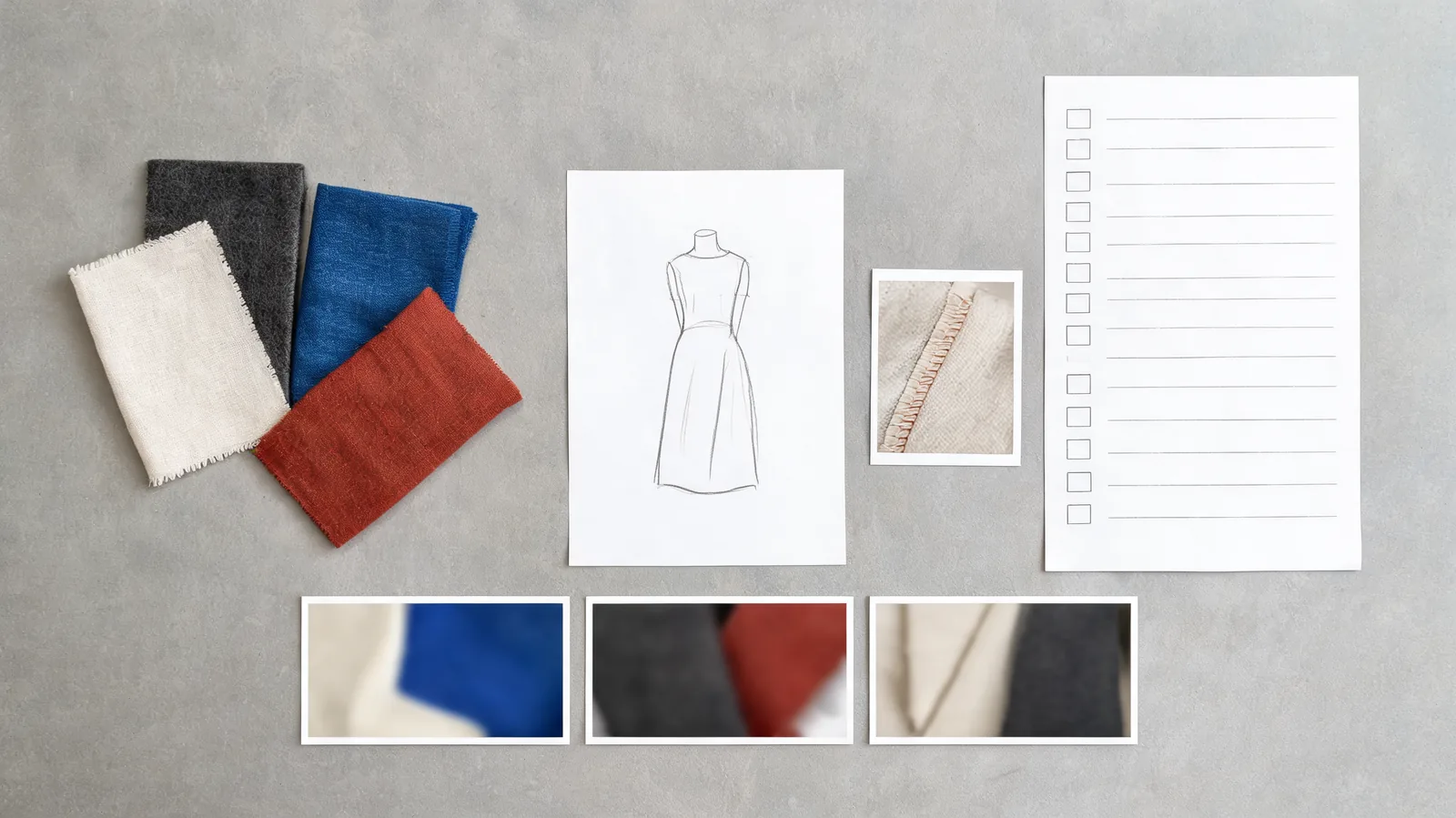
The review asks whether the visible garment still matches the approved reference, not whether a generated frame is visually appealing.
Set the use limit before you approve
“Use it for social” is not an approval decision. Name the smallest permitted use and keep the limitation with the file.
| Decision | When it can fit | Required limit |
|---|---|---|
| Internal concept only | The clip helps discuss pacing, styling mood, or a future shoot | Keep it out of customer-facing distribution |
| Clearly labeled concept post | The team can support the visible garment reference and approves the context | Preserve the approved label, source, and scope with the post |
| Background mood only | No viewer needs the clip as proof of a garment, promotion, or endorsement | Keep it away from unsupported factual product copy |
| Reject and replace | Material drift, uncertain rights, or a likely factual interpretation | Use verified media or revise the campaign claim |
Clear labeling is not a cure for a changed product fact. If the output invents a pocket, removes a closure, changes a printed pattern, or suggests a colorway that does not exist, a small disclosure does not make it a faithful garment representation. Re-render a tightly limited concept, use an abstract non-product visual, or replace the frame with conventional media.
For current U.S. policy resources concerning AI and copyright, the U.S. Copyright Office AI initiative collects materials and reports. It does not decide whether a particular fashion source, person, output, or campaign is cleared. The practical rule here is narrower: do not let a synthetic visual make a product or rights claim your records cannot support.
Leave an approval note another editor can use
Write observations, not a general claim that a generator is reliable. A useful note may be only a few lines:
Candidate:
coat-concept-v02· Source: permitted studio image of sampleCT-18, approved September 30.Decision: reject for public product post. The opening preserves the navy jacket, but the movement changes the lapel edge and adds a red shoulder panel. Keep only for an internal styling discussion; use verified photography for the product page.
For a limited approval, keep the source reference, permission note, output version, reviewer, date, intended channel, allowed caption or label, and known limitations. A later editor should not have to guess whether a polished clip was a real campaign asset, an unapproved test, or a deliberately limited concept.
The product-video review checklist helps with generic product continuity. Fashion needs its own pass because a small visual change can alter how a shopper reads fit, material, styling, and identity. If the concern is an uploaded person or confidential sample, also review the image-upload privacy checklist before any new generation.
Replace concept footage when the post needs proof
Use verified photography, footage, approved copy, or a new shoot whenever the material must show the actual garment, exact colorway, fit, construction, material, styling, stock, price, offer, endorsement, person, location, event, or performance. A concept clip can inspire a treatment; it should not fill a missing evidence gap.
The same restraint applies to compositing and captions. Do not put a synthetic concept beside a product name, availability statement, creator testimonial, or promotional claim unless those facts are independently verified and the review owner has approved the whole presentation. If the creative intent survives without the factual implication, reframe the post as an appropriately labeled concept. If it does not, conventional media is the more honest choice.
Frequently asked questions
Can a fashion concept clip be approved because the outfit looks close to the source image?
No. Review the full clip against the permitted source. Reject it for public use if it changes a material garment detail, print, fit, seam, silhouette, brand mark, product identity, availability implication, or other fact a viewer could rely on.
What should a fashion team keep with an approved concept clip?
Keep the permitted source reference, rights note, generated version, reviewer, date, intended channel, visible limitations, and approved label or context. Recheck current platform, advertising, and local requirements for the actual post.
When should a generated lookbook concept be replaced with real media?
Use verified photography or footage when the post needs to show the actual garment, colorway, fit, construction, styling, stock, price, promotion, endorsement, model, or event. A synthetic concept should not stand in for unsupported product evidence.
Approve the evidence, not the polish
The useful outcome is a clear one: retain this exact output only for this narrow concept use, request a revision, or replace it because the campaign needs verified fashion media. Once the source and reviewer are ready, open the Seedance studio for a restrained new test rather than treating an unreviewed render as a finished lookbook asset.